
Guiding Questions
- What is the bladder?
- What are the parts of the bladder?
- What are the functions of the bladder?
Overview
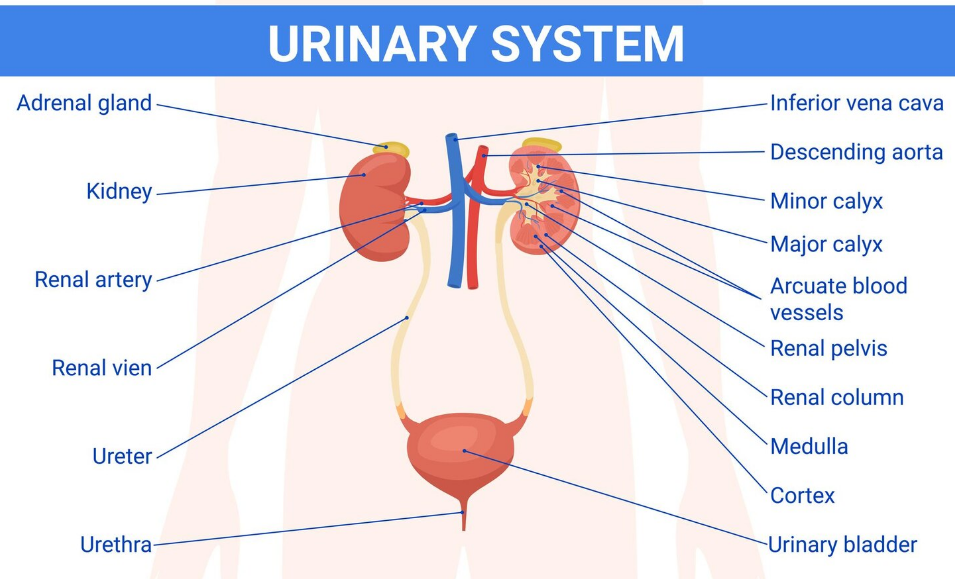
The bladder is a vital part of the urinary/excretory system. It is near the end of the path of the urinary system. It’s like a balloon, holding urine that is made by the kidneys until it is excreted. It is typically pink or dark pink.
Parts of the Bladder
The bladder has four main parts.
The dome or apex is the top part that faces the abdominal wall.
The base or fundus is the back or bottom section.
The body is the space between the base and the dome.
Lastly, the neck is the part that connects the bladder to the urethra. It contains smooth muscle that helps control the flow of urine.
Layers of the Bladder
The bladder is composed of 3 main layers.
The urothelium or transitional epithelium is the innermost layer made of cells called urothelial or transitional cells. It seals the bladder to prevent leakages.
The lamina propria or submucosa is a thin layer around the urothelium. It is a thin tissue containing other components such as blood vessels, structural proteins, glands, and nerves.
The final layer is the thick muscularis propria that is made of 3 layers of smooth muscle. They control involuntary movements of the bladder, such as tightening and relaxing.
Medical Tests
Sometimes doctors will use a patient’s urine to analyze it for possible health issues. Color and components can often tell a doctor if you have any medical issues.
Review
- How many parts is the bladder made of? Four
- What part of the bladder connects it to the urethra? The Neck
- How many layers is the bladder made of? Three
- What is the innermost layer of the bladder that seals it and prevents leakages? The Urothelium
- What is the thick outer layer of the bladder that is made of smooth muscle? The Muscularis Propria
DISCLAIMER: THIS BLOG POST DOES NOT PROVIDE MEDICAL ADVICE
The blog post and everything contained on it is for informational purposes only. No material on this site is intended to be a substitute for professional medical advice, diagnosis or treatment. Always seek the advice of your physician or other qualified health care provider with any questions you may have regarding a medical condition or treatment and before undertaking a new health care regimen, and never disregard professional medical advice or delay in seeking it because of something you have read on this website.

Recent Comments