
Nutrition labels contain so much beneficial information that you may miss every time you buy a packaged food item. Using these labels can help you manage your energy levels, understand what is in your food, and overall just be a powerful tool to make healthier food choices. The five key parts of a nutrition label include: serving size, sugars, fiber, sodium, and the ingredients present in the food.
Serving Size
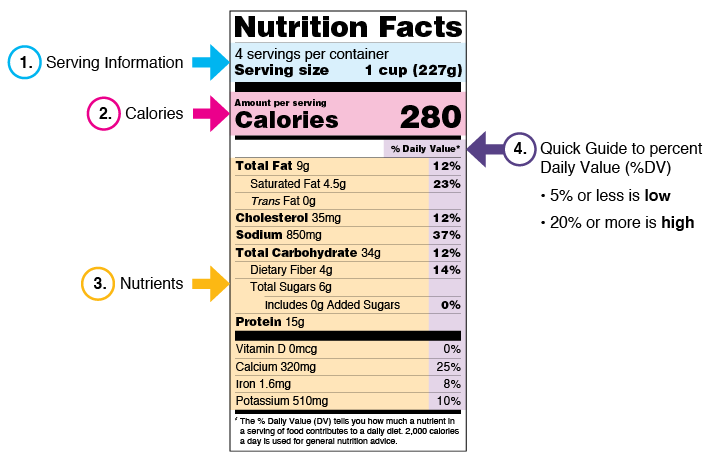
The first thing you should look for on a nutrition label is the serving size. All the numbers you see—calories, sugars, sodium, and more—are based on one serving of the food.
Why this matters:
- Packages often contain more than one serving; If you eat double the serving size, you are also eating double the nutrients and calories.
For instance, if one serving is 1 cup but you eat 2 cups, you need to multiply all the listed values by two. Always compare how much you actually eat in relation to the serving size. The serving size shows a typical amount of food consumed by an average person; not a recommendation of how much you should eat. Be mindful of the nutrients, calories, and sugars you consume based on the quantity you eat.
Sugars
Sugars are measured in grams and are typically divided into two categories: added sugars and total sugars.
- Total sugars include both natural sugars (sugars in fruit or milk) AND added sugars.
- Added sugars are sugars put into the food during processing, such as corn syrup, cane sugar, or honey.
Why added sugars matter:
- Too much added sugar can lead to long-term and sudden health issues.
- Health guidelines recommend keeping added sugars as low as possible. According to the FDA the daily value (a reference amount of nutrients that shouldn’t exceed) for a 2,000 calorie diet is 50 grams of added sugars.
A good rule to follow: choose foods with low or zero added sugars, especially for everyday snacks and drinks.
Fiber
Dietary fiber is a type of carbohydrate that helps with digestion, keeps you full longer, and supports heart health.
Advantages of fiber
- Promotes intestinal health and digestion
- Keeps you feeling full, which can help with portion control
- Supports healthy blood sugar levels
Look for foods that have 3-5 grams of fiber per serving on nutrition labels. Fruits, vegetables, nuts, beans, and whole grains are often good sources of fiber.
Sodium
Sodium is another name for salt, and it’s often found in high amounts in packaged and processed foods.
Why sodium matters:
- Too much sodium can raise blood pressure
- High sodium intake is linked to heart problems over time
Daily recommendations from the FDA generally suggest limiting sodium to about 2,300 mg per day (or less).
Tips when reading labels:
- Compare similar products and choose the one with less sodium.
- Foods with 140 mg or less per serving are considered low in sodium.
- 5% DV (daily value percentage for each nutrient in the serving size) or less of sodium per serving is considered low, and 20% DV or more of sodium per serving is considered high.
Ingredients
The ingredients list tells you what the food is made of, listed from most to least by weight.
What to look for:
- Shorter ingredient lists usually mean less processing.
- Whole foods (like oats, rice, beans, fruits, and vegetables) should appear near the top.
- Watch out for multiple types of added sugars (they may appear under different names).
If you can recognize and pronounce most of the ingredients, that’s often a good sign.
Finally
Remember to always start with the serving size, aim for low added sugars and sodium, look for higher fiber, and scan the ingredients list for whole, simple foods. Learning how to read a nutrition label is an essential skill. With a little practice, you’ll be able to quickly spot healthier options and make choices that support your dietary goals.

Recent Comments