
What a Balanced Plate Looks Like for Kids and Teens
Growing kids and teens have high energy needs, rapid growth, and changing appetites. With school, sports, homework, and other activities, it can be hard to know what a healthy, balanced plate should look like.
A balanced plate isn’t about strict rules. It’s about giving kids the right mix of nutrients, portions, and variety to support growth, learning, and energy throughout the day. This can also help them develop healthy eating habits that last a lifetime.
Why a Balanced Plate Matters
Kids and teens need meals that include protein, whole grains, fruits, vegetables, and healthy fats, according to the USDA and Harvard T.H. Chan School of Public Health. Each part has an important role:
Protein helps build muscles, repair tissues, and support immunity.
Fruits and vegetables provide fiber, vitamins, and antioxidants for growth and brain health.
Whole grains offer sustained energy and aid digestion.
Healthy fats help brain development, hormone production, and overall energy.
Eating balanced meals can lower the risk of overeating, support healthy weight management, and keep kids fueled for school, sports, and play. (USDA MyPlate)
The Balanced Plate Breakdown
Here’s a simple way to picture a healthy plate for kids and teens:
- Half the Plate: Fruits and Vegetables
Fill 50% of the plate with colorful vegetables and fruits. Include leafy greens, carrots, bell peppers, berries, apples, and oranges.
Fun tip: Let kids choose fruits and veggies at the store. They’re more likely to eat what they pick!
Why it works: Colorful plates mean a wider range of vitamins, minerals, and antioxidants.
- One-Quarter of the Plate: Protein
Choose lean animal protein like chicken, turkey, fish, or eggs. You can also use plant-based protein like beans, lentils, tofu, or tempeh.
Protein supports muscle growth, keeps kids full, and helps brain function.
Evidence shows that kids with enough protein intake grow better, develop stronger muscles, and concentrate more. (Academy of Nutrition and Dietetics)
- One-Quarter of the Plate: Whole Grains
Select whole grains like brown rice, quinoa, oats, whole-wheat bread, or pasta.
Whole grains provide complex carbohydrates that release energy slowly, which is good for busy school days.
Fun idea: Swap plain rice or pasta for whole-grain versions. They taste great and offer more nutrients.
- Small Portion: Healthy Fats
Include avocado, nuts, seeds, olive oil, or fatty fish like salmon.
Healthy fats are crucial for brain development, energy, and hormone regulation, especially for teens.
Tip: Pair healthy fats with fruits or veggies for tasty, filling snacks. Try apple slices with almond butter or avocado toast.
- Hydration
Water should always be the main drink.
Limit sugary drinks like soda or juice. These can spike blood sugar and add empty calories.
Milk or fortified plant-based milks offer extra calcium and vitamin D for growing bones.
Vegetarian and Vegan Balanced Plates
Even without meat, kids and teens can enjoy fully balanced, nutrient-rich meals. Plant-based plates just require some planning to cover protein, iron, zinc, B12, and omega-3s.
Plant-based protein options:
- Legumes: beans, lentils, chickpeas
- Soy products: tofu, tempeh, edamame
- Nuts and seeds: almonds, sunflower seeds, pumpkin seeds
- Whole grains: quinoa, oats, brown rice
- Plant-based protein powders (optional, for teens with higher protein needs)
Other nutrients:
Iron & zinc: Beans, lentils, tofu, nuts, seeds, and whole grains. Pair these with vitamin C-rich foods like oranges or bell peppers to improve absorption.
Vitamin B12: Fortified plant milks, cereals, or nutritional yeast.
Omega-3s: Chia seeds, flaxseeds, walnuts, or algae-based supplements.
Plant-based plate proportions (Same as any balanced plate):
- Half fruits and vegetables
- One-quarter plant-based protein
- One-quarter whole grains
- Small portion of healthy fats
- Water or fortified plant-based milk
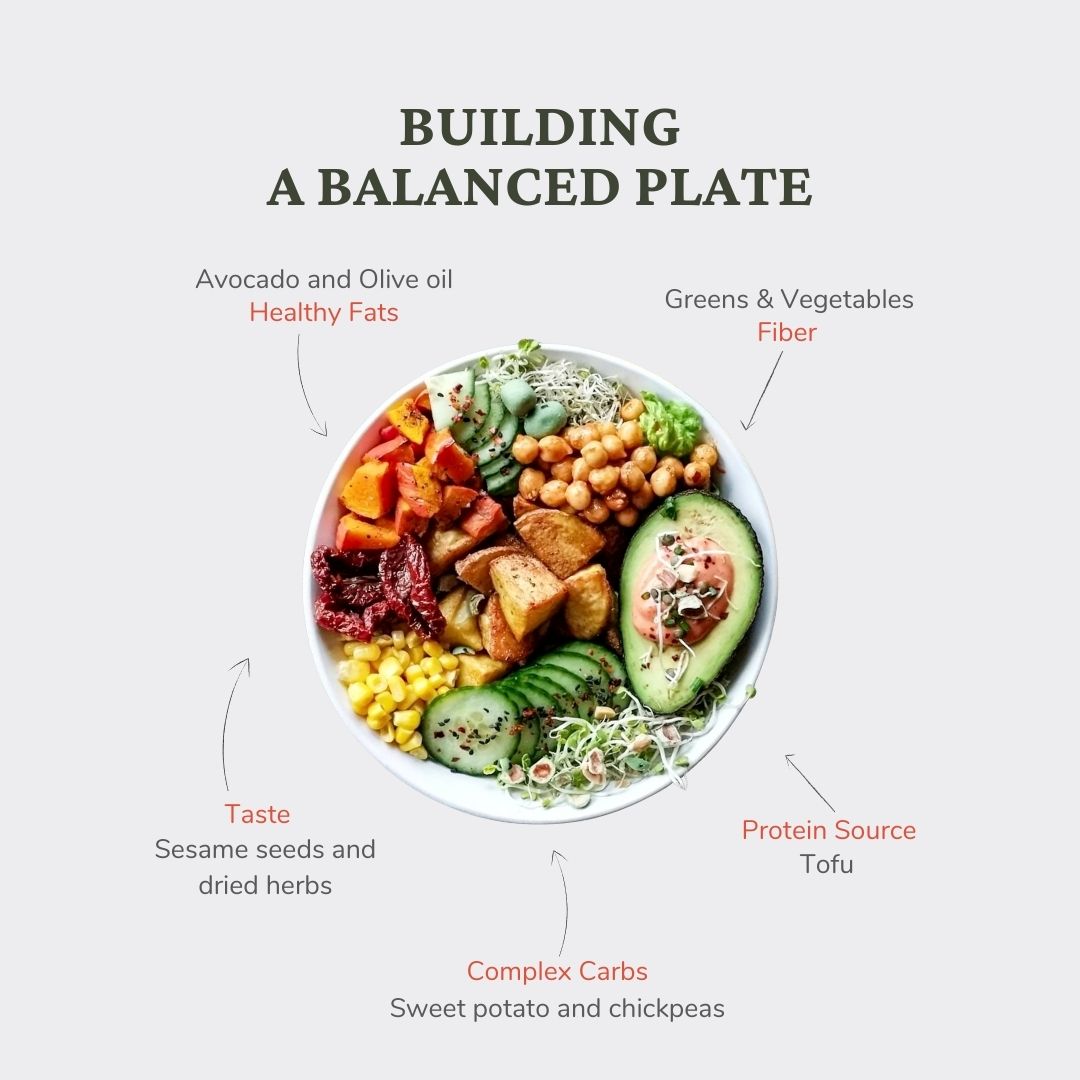
Example plant-based plate:
- Lentil curry or tofu stir-fry
- Roasted broccoli, carrots, and bell peppers
- Quinoa or brown rice
- Berries or apple slices
- Avocado slices or a sprinkle of seeds
Tip: Mix protein sources and eat a rainbow of veggies to ensure your child gets all the nutrients they need. (Academy of Nutrition and Dietetics, 2023)
Sample Meals for Kids and Teens
Breakfast: Oatmeal with chia seeds, almond butter, berries, and plant-based milk
Lunch: Quinoa salad with black beans, corn, peppers, avocado, and lime dressing
Snack: Apple slices with sunflower seed butter
Dinner: Tofu stir-fry with brown rice and mixed vegetables
Tips for Building a Balanced Plate
-Keep it colorful. Different colors mean different nutrients.
-Portion sizes are important. Use your child’s hand as a guide: fist-sized fruits, palm-sized protein, and a cupped hand for grains.
-Mix textures and flavors. Use crunchy veggies, soft grains, and creamy yogurt to make meals fun and interesting.
-Get kids involved. They’re more likely to eat what they help prepare.
-Model healthy eating. Kids mimic adults, so show them how it’s done!
Why It Works
Following the balanced plate method:
- Prevents overloading on sugar or processed foods.
- Helps kids feel full without overeating.
- Supports growth, learning, and athletic performance.
- Builds healthy lifelong habits.
Fun fact: Kids who eat a variety of fruits, vegetables, whole grains, and lean proteins tend to do better academically and have fewer behavioral issues. (Harvard School of Public Health)
Bottom Line
A balanced plate is simple, colorful, and flexible. Half fruits and vegetables, a quarter protein, a quarter whole grains, along with healthy fats and water create:
– Growth and strong muscles
– Steady energy
– Improved focus and learning
– Healthy eating habits for life
Start with one balanced meal a day and build from there. Over time, your kids’ plates and their bodies, will thank you!

Recent Comments