
Have you ever wondered?
Why is Vitamin A especially important for eyesight?
Can a nutrient actually act as an “instruction manual” for our cells to grow?
Is it possible to eat so much Vitamin A that your skin actually changes color?
The Science of Sight and Retinoids
Vitamin A is a group of fat-soluble compounds called retinoids that are essential for the biological process of seeing.
- The Vision Cycle: Vitamin A is used to produce rhodopsin, a protein in your eyes that allows you to see in low-light conditions. A deficiency causes “night blindness.”
- Two Main Types:
- Preformed Vitamin A (Retinol): Found in animal products like dairy and fish.
- Provitamin A (Carotenoids): Found in plants, like beta-carotene in carrots, which your body must convert into active Vitamin A.
Growth, Immunity, and Cellular Logic
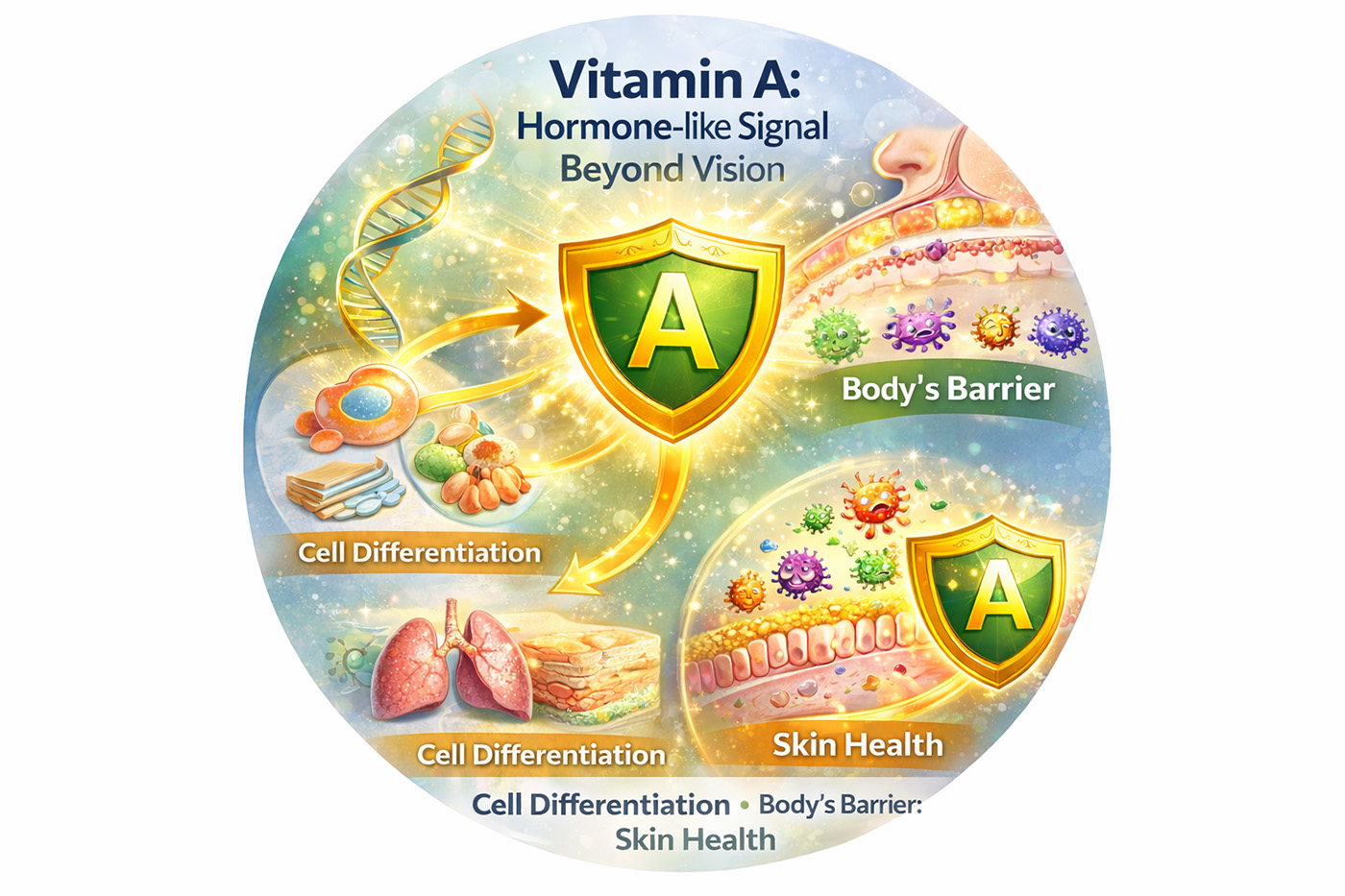
Beyond its role in vision, Vitamin A acts as a hormone-like signal that tells your cells how to grow and your immune system how to fight.
- Cell Differentiation: Vitamin A is vital for gene expression. It tells stem cells what to become—such as skin cells or lung tissue.
- The Body’s Barrier: It maintains the “mucosal barriers” (the lining of your nose, mouth, and gut) that trap bacteria before they make you sick.
- Skin Health: It promotes cell turnover, which is why it is used in medicine to treat acne and help wounds heal faster.
Fun Facts
Here are some interesting facts about Vitamin A:
- If you eat too many carrots or pumpkins, the beta-carotene can build up in your skin, making your palms or soles look orange! This is called carotenemia.
- Scientists created a genetically modified type of rice that contains beta-carotene to help prevent blindness in countries where Vitamin A is hard to find.
- While we think of carrots, dark leafy greens like kale and spinach are actually packed with more Provitamin A than almost any other vegetable.
Review
Let’s quickly recap what we learned about Vitamin A:
- What is the specific protein in our eyes that Vitamin A helps create for night vision? Rhodopsin
- Is Vitamin A considered a fat-soluble or water-soluble vitamin? Fat-soluble
- What is the term for Vitamin A directing a cell’s specialized development? Differentiation
- What is the name of the orange pigment in carrots that our body converts into Vitamin A? Beta-carotene

Recent Comments