
The “Eyes” of the Car
Just like humans need eyes and ears, autonomous vehicles rely on super-powered sensors to navigate the world.
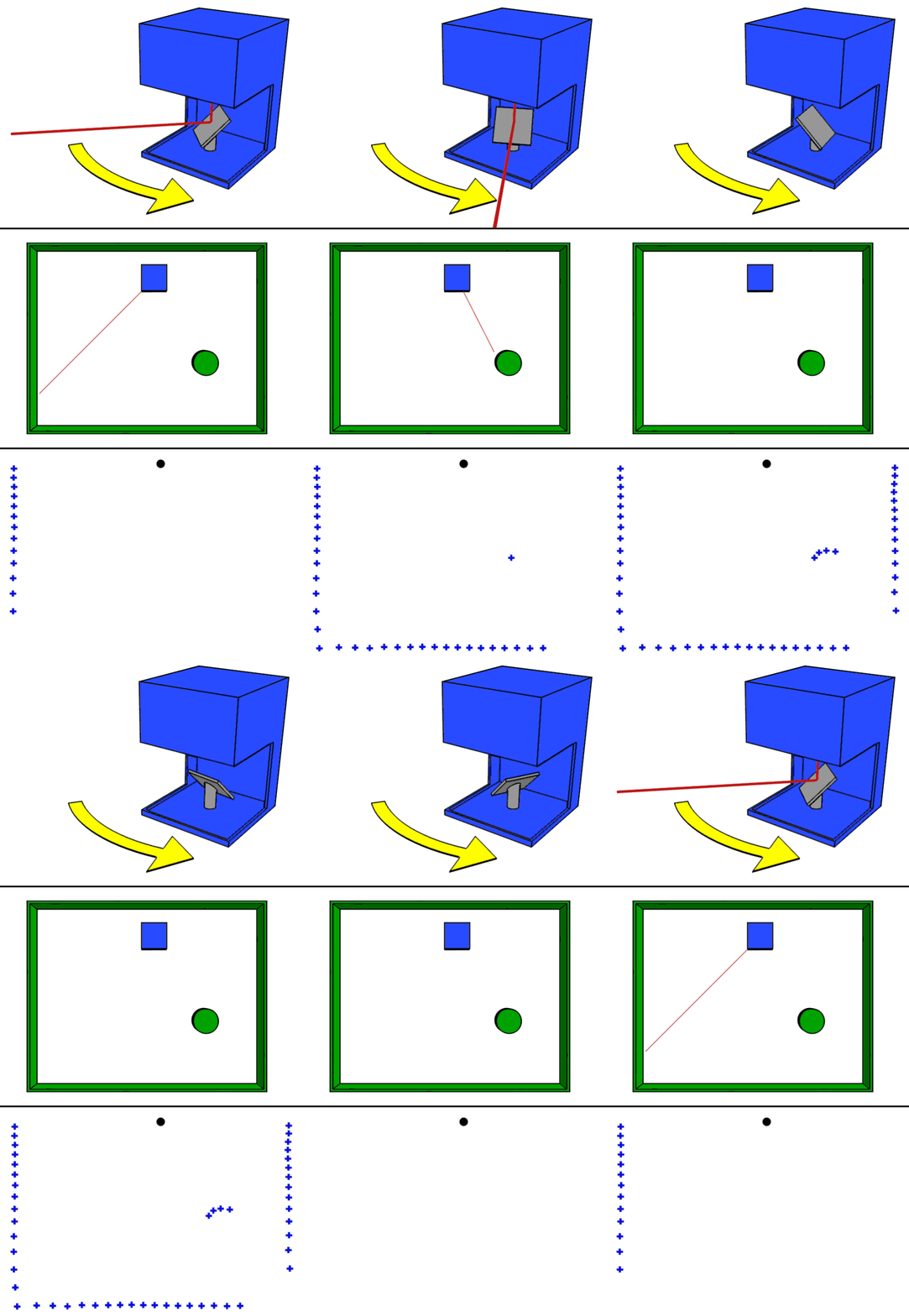
- LiDAR (Light Detection and Ranging): Uses spinning lasers to measure distance, creating a precise 3D map of the world, just as a bat uses sound (echolocation).
- Cameras: Act like human eyes to read speed limit signs, spot traffic light colors, and see brake lights on other cars.
- Radar: Uses radio waves to detect the speed of nearby objects, working effectively even in bad weather such as fog or rain.
The “Brain” Power
All the data from the sensors is sent to a powerful computer brain that makes split-second decisions.
- Artificial Intelligence (AI): The car’s computer uses machine learning to identify objects. It learns to distinguish between a mailbox and a child crossing the street.
- High-Definition Maps: Unlike regular GPS, these cars use super-detailed maps that know exactly how wide each lane is and where every curb is.
- Vehicle-to-Vehicle Communication: Future cars will “talk” to each other, sharing information like “I’m braking!” before a human could even react.
Fun Facts
Here are some interesting facts about self-driving cars:
- Autonomous cars have 360-degree vision. They can look in all directions at the same time, something no human can do!
- The world’s first truly autonomous, self-driving passenger vehicle was demonstrated by a team at Japan’s University of Tsukuba in 1977, navigating road markings using onboard cameras at roughly 20 mph.
- In 1925, the “American Wonder,” a driverless vehicle, drove through NYC while being radio-operated from another vehicle following it.
Review
Let’s quickly recap what we learned about self-driving cars:
- Which sensor uses lasers to make 3D maps? LiDAR
- What part of the car acts as its “brain”? Computer (AI)
- What uses radio waves to detect the speed of nearby objects? Radar
- What kind of vision do autonomous cars have? 360-degree vision

Recent Comments