
The Science of “Breaking Down”
Plastics don’t truly decompose; instead, they break apart very slowly into smaller and smaller fragments through a process called photodegradation.
- Decomposition (Good): Organic items are broken down by microorganisms and recycled into nature.
- Degradation (Bad): Plastic is broken down by UV rays (photodegradation) into smaller pieces, not recycled.
The “Forever Chemical”:
- Most plastics, especially polyethylene (used in bags and bottles), are designed to be durable.
- Strong chemical bonds prevent microbes from breaking plastic down, so it can last for thousands of years.
The Microplastic Menace
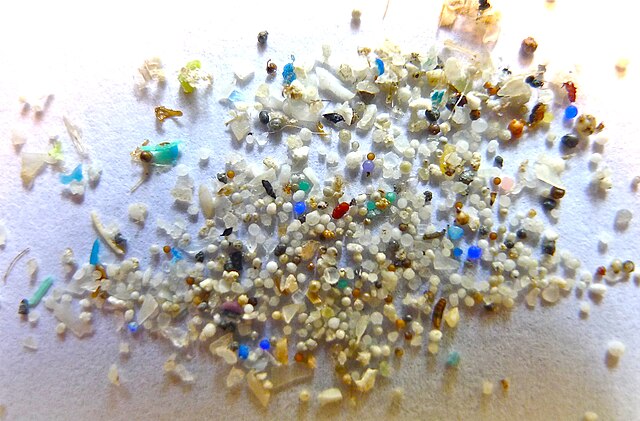
What are Microplastics? These are tiny plastic pieces, less than 5 millimeters long that pollute oceans and soil and pose a serious threat to all living things. They come from two main sources:
- Primary: Microbeads (once used in face washes) and plastic fibers shed from clothing in the wash.
- Secondary: Fragments of larger items (bottles, tires, bags) that broke down due to the sun and waves.
Ocean Impact: Tiny marine creatures (like plankton) eat microplastics, which have absorbed toxins from the water.
Bioaccumulation: As larger animals (fish, whales, humans) eat these contaminated organisms, the plastic and toxins build up and move higher up the food chain.
Fun Facts
Here are some interesting facts about microplastics:
- A single load of laundry can release hundreds of thousands of microscopic plastic fibers from synthetic clothes (like polyester fleece) into the water system.
- Scientists use sieves, sticky filters, and microscopes to count microplastics in water and soil samples.
- The Great Pacific Garbage Patch is the largest accumulation of ocean plastic in the world.
- Plastic as we know it has only existed since the 1950s. Almost every piece of plastic ever created still exists in some form today.
Review
Let’s quickly recap what we learned about microplastics:
- What kind of radiation breaks down plastic? Ultraviolet Radiation
- What do we call the process where toxins build up in the food chain? Bioaccumulation
- What is the primary way that large plastic breaks down into small pieces? Photodegradation
- What highly durable plastic is used in bags and bottles? Polyethylene

Recent Comments