
Guiding Questions
In this blog we’re going to be investigating what the doctor does about your allergies during a check-up. A lot of people don’t know what doctors are looking for, and they have questions like:
- What causes my allergies?
- How does a doctor figure out what I’m allergic to?
All About Allergies
Allergies affect many people, especially in places like Texas. Some people think allergies are infectious, some have even more misconceptions. Let’s learn about allergies and dispel these myths.
- How It Happens: Allergies occur when the immune system, which is designed to fight off dangerous invaders like viruses and bacteria, accidentally labels a harmless substance as a threat. This can cause an immune reaction leading to symptoms like hives, swelling, runny nose and eyes, itchy skin, and more.
- Common Allergens: Common triggers for allergies include: pollen, pet hair, foods like peanuts and dairy, insect bites, latex, and certain medications.
- Treatments: Most people with allergies pursue a treatment. Many take over the counter medications like Claritin, Zyrtec, Allegra, and Benadryl. Some people go for a permanent cure, immunotherapy, this is when the patient purposefully exposes themselves to the trigger to build up resistance. But above all, lifestyle changes will always be helpful. Avoiding allergy trigger, using air filtration, and saline rinses will help without any medicine.
Allergy Blood Test
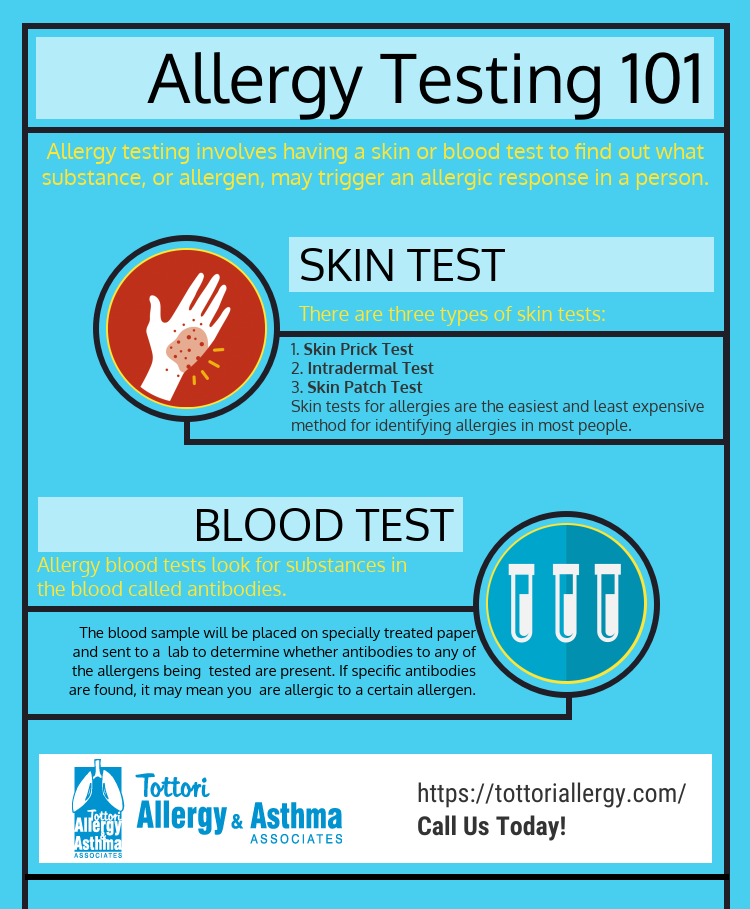
Before attempting to find solutions to allergies, the patient must find out what is the trigger of their allergy. This is done using an allergy blood test. A doctor will order this test in cases where other allergen detecting methods may not produce adequate results. Let’s learn about the steps used to conduct an allergy blood test.
-
- Consultation And Preparation: Before the test, a doctor will review your medical history and symptoms. Instead of testing for everything, the doctor selects specific allergens based on your history. Unlike skin tests, you do not need to stop taking antihistamines or other allergy medications before a blood draw.
- Blood Draw: A standard blood draw will be taken to collect a sample of blood for testing.
- Laboratory Analysis: The blood is sent to a lab, and the lab uses a plate or disc coated with the specific allergen. Then, your blood serum is added to the plate. If you have antibodies for the allergen, they will stick to the allergen. A special enzyme is added that only sticks to antibodies. A chemical is added that causes a color change or light signal when it hits that enzyme. The stronger the signal, the more antibodies are present.
- Scoring And Results: The lab quantifies the amount of antibodies found. Results are typically returned to your doctor within a few days. Results are measured in kU/L (kilo-units per liter). Generally, any value above 0.35 kU/L is considered a positive result, indicating sensitization. Higher numbers suggest a higher likelihood of a true allergy.
- Interpretation: A high number only indicates whether the immune system is ready to react, but it doesn’t mean that you will have a severe reaction. Your doctor will compare the blood results against your actual physical symptoms to provide a final diagnosis.
Review
Here are some questions to review your knowledge about allergy blood tests.
- What body system overreacts during an allergy? The Immune System
- What should be used to rinse the nose during an allergy? Saline
- What is the trigger of an allergy called? The Allergen
- A value above what is considered a positive result? 0.35 kU/L
DISCLAIMER: THIS BLOG POST DOES NOT PROVIDE MEDICAL ADVICE
The blog post and everything contained on it is for informational purposes only. No material on this site is intended to be a substitute for professional medical advice, diagnosis or treatment. Always seek the advice of your physician or other qualified health care provider with any questions you may have regarding a medical condition or treatment and before undertaking a new health care regimen, and never disregard professional medical advice or delay in seeking it because of something you have read on this website.

Recent Comments