
Guiding Questions
In this blog we’re going to be investigating what the doctor does about your lumps during a check-up. A lot of people don’t know what doctors are looking for, and they have questions like:
- What could a lump on my body be?
- Why does my doctor need to take a biopsy?
What Could A Lump Be?
Lumps are a scary thing for many people, but it is helpful to know that most lumps are benign and not cancerous. But in case you do feel concerned, always talk to your doctor. There are a few causes for lumps and most are benign, let’s explore them.
- Lipomas: These are soft, fatty tumors located just under the skin. They are usually painless, feel squishy, and move easily when pressed with a finger.
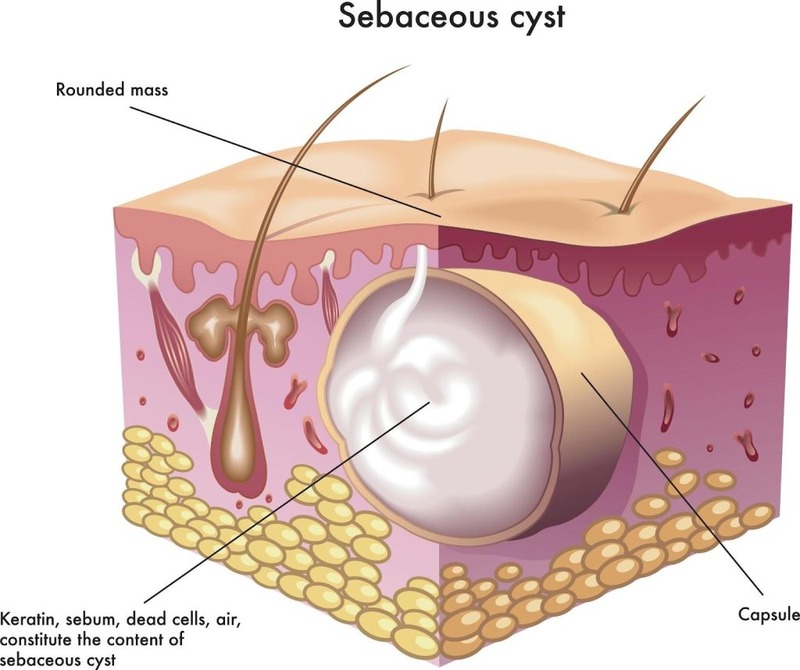
- Cysts: Often felt as smooth, hard bubbles under the skin, these are sacs filled with fluid or keratin (sebaceous cysts). They can sometimes become inflamed or infected.
- Swollen Lymph Nodes: Found in the neck, armpits, or groin, these often swell in response to an infection like the cold or flu, or because of inflammation. They usually shrink once the illness passes.
- Abscesses: These are pockets of infection filled with pus. They are typically red, warm, and painful to the touch.
- Fibroadenomas: Common in breast tissue, these are solid, non-cancerous rubbery lumps that move easily.
This is a helpful table to look at and decide whether a lump is ok or needs medical attention.
| Feature | Usually Benign | Needs Evaluation |
| Growth | Stays the same size | Grows rapidly over weeks |
| Texture | Soft or rubbery | Hard, fixed, or irregular |
| Pain | Painful (often an infection) | Painless but persistent |
| Movement | Moves easily under skin | Feels “anchored” to tissue |
All About The Biopsy
A biopsy is a procedure in which a small amount of fluid, cells, or tissue is removed from the body to be analyzed in a lab. Biopsies can be used to diagnose a lump or patch of skin as benign or cancerous. Let’s go over the steps of a biopsy.
- Cleaning: The skin over the site is cleaned with an antiseptic.
- Anesthesia: A local anesthetic is injected to numb the area. You might feel a quick sting, but the site should go numb shortly after. For deeper or more complex biopsies, you may receive a sedative or general anesthesia.
- Sample Collection: A multitude of techniques are used to collect samples. Depending on the size and location of the lump, the surgeon may use needles, razors, or traditional surgery.
- Closing the site: Most needle biopsies only require a small bandage. Surgical or razor biopsies may require a few stitches or adhesive strips.
- Recovery: You may be asked to rest for a short period. If you were sedated, you will need someone to drive you home.
- Pathology: The tissue is sent to a lab where a pathologist examines it.
- Processing: The sample is often treated with chemicals, sliced into paper-thin layers, and stained with dyes so the cells can be seen clearly under a microscope.
- Diagnosis: The pathologist looks for abnormal cell growth, signs of infection, or inflammation. The pathologist communicates their finding to your doctor, who can then diagnose the cause of the lumps.
Review
Here are some questions to review your knowledge about lumps and biopsies.
- What are soft fatty tumors under the skin called? Lipomas
- Where are lymph nodes typically found? The Neck, Armpits, Or Groin,
- What type of movement does a benign tumor have? Easy Movement
- What is a biopsy? A procedure in which a small amount of fluid, cells, or tissue is removed from the body
DISCLAIMER: THIS BLOG POST DOES NOT PROVIDE MEDICAL ADVICE
The blog post and everything contained on it is for informational purposes only. No material on this site is intended to be a substitute for professional medical advice, diagnosis or treatment. Always seek the advice of your physician or other qualified health care provider with any questions you may have regarding a medical condition or treatment and before undertaking a new health care regimen, and never disregard professional medical advice or delay in seeking it because of something you have read on this website.

Recent Comments