
Guiding Questions
In this blog we’re going to be investigating what the doctor does about your urine during a check-up. A lot of people don’t know what doctors are looking for, and they have questions like:
- What is the color and composition of urine?
- Why does my doctor need a urine sample?
Composition Of Urine
Urine is not just water or bacteria. Urine is the body’s way of excreting the multitude of wastes in the blood. There are many components like water, urea, electrolytes, and other waste products.
- Water: Urine is composed of 95% water. It is the main substance found in urine.
- Urea: Whenever proteins in the body break down, the waste product is a molecule called Urea. Urea makes up about 2% of urine.
- Electrolytes: Electrolytes are the various salts found in the blood. Whenever the body balances them, they come out in the urine. Electrolytes make up a little of 1% of urine. The main ones found in urine include sodium, potassium, and chloride.
- Other Waste Products: Other substances make up the rest of urine. Notable examples include creatinine, a waste product made by muscles, and urochrome, the yellow pigment that gives urine its color.
Color Of Urine
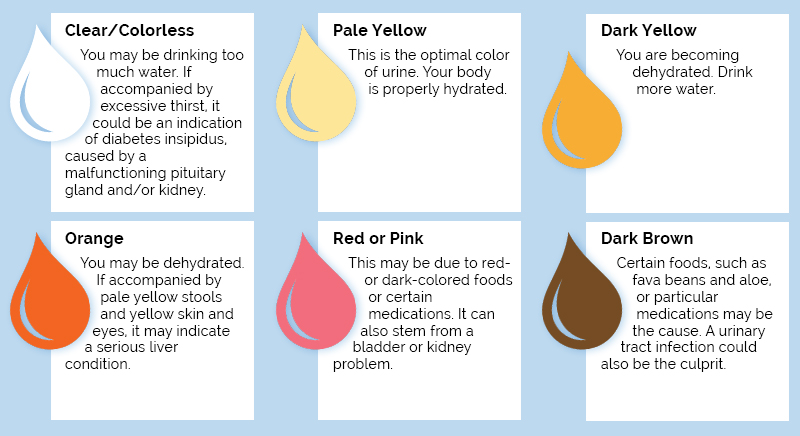
Urine has a range of colors that indicate health. Healthy urine is a shade of yellow, and any other color indicates some sort of dysfunction.
- Clear/Pale Yellow: This indicates a healthy amount of hydration. In some cases, if the urine is fully transparent, it may even indicate that you are drinking too much water.
- Yellow: Yellow is still healthy urine. You are drinking an adequate amount of water. If the shade of yellow is on the darker side, you may need to drink more water.
- Dark Yellow: A dark shade of yellow indicates dehydration. This means you are lacking water and need to drink some as soon as possible.
- Brown: Brown urine indicates either severe dehydration or liver disease. If this keeps occurring or you feel very sick, seek medical care quickly.
- Red: This means you have hematuria, a symptom of many issues in which you have blood in the urine. Possible issues include kidney disease, tumors, or infection.
- Cloudy: Cloudy urine can indicate a urinary tract infection. Speak with a doctor about any other symptoms you may have.
Urinalysis
Urinalysis is the name for all the types of testing doctors do to urine. There may be many reasons to do urine testing such as infections, kidney disease, diabetes, and other illnesses. Urine testing is done by collecting urine in a sterile cup and using chemical dipsticks and looking at samples under a microscope. Urinalysis measures sugar levels, proteins, blood levels, bacteria, and other cells.
- Sugar: A high level of sugar in the urine indicates that the patient has diabetes.
- Proteins: If there is a significant amount of protein in the urine, it indicates a problem with the kidneys. Problems include kidney stones and kidney disease/failure.
- Blood: Blood in the urine shows that there is bleeding somewhere in the urinary tract. The causes for this could be tumors, kidney stones, infections, and many other possible diseases.
- Bacteria/Immune Cells: Bacteria and immune cells that can be seen under the microscope is a tell-tale sign of urinary tract infection. Doctors will prescribe antibiotics to help.
Review
Here are some questions to review your knowledge about urine.
- Water makes up what percent of urine? 95%
- What color of urine is healthy? Clear To Yellow
- What does cloudy urine indicate? A UTI
- What organ is having an issue if there is protein in the urine? Kidneys
DISCLAIMER: THIS BLOG POST DOES NOT PROVIDE MEDICAL ADVICE
The blog post and everything contained on it is for informational purposes only. No material on this site is intended to be a substitute for professional medical advice, diagnosis or treatment. Always seek the advice of your physician or other qualified health care provider with any questions you may have regarding a medical condition or treatment and before undertaking a new health care regimen, and never disregard professional medical advice or delay in seeking it because of something you have read on this website.

Recent Comments