
Guiding Questions
- What is the endocrine system?
- What are the components of the endocrine system?
- What are the functions of the endocrine system?
- What are some common diseases related to the endocrine system?
Overview
When you go to a restaurant, you may have noticed a soda machine. This soda machine has different dispensers that dispense different sodas. You can control which sodas are dispensed by pressing different buttons. In the end, you will get your desired drink!
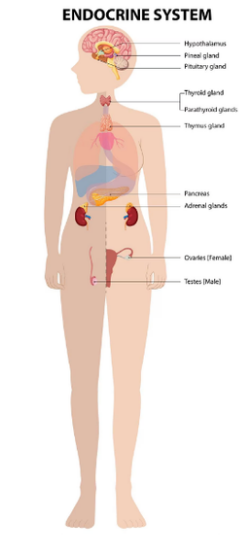
Similarly, the endocrine system is the system that controls the release of various hormones in the body. Hormones are chemicals that give signals to your body to do different things. The endocrine system is vital to the body’s function. It consists of various glands, organs, and tissues that work together to release hormones.
Endocrine System Glands
Glands are body tissues that release specific substances that control different functions in the body. Although the endocrine system has many glands, not all glands of the body are part of this system.
The pineal gland in the brain releases melatonin. Melatonin is what controls your body’s circadian rhythm – in other words, it regulates your body’s sleep schedule.
The pituitary gland, also in the brain, releases 8 different hormones. Some of the hormones it releases actually control other glands of the endocrine system.
The thyroid gland just behind the front skin of the neck is shaped like a small butterfly. The hormones it releases control the body’s metabolism.
The 4 tiny parathyroid glands behind the thyroid release the parathyroid hormone (PTH). This hormone controls the blood’s calcium levels.
The adrenal glands on top of your kidneys release hormones that control metabolism, blood pressure, stress response, and more. For example, it releases adrenaline (also known as epinephrine), which controls your fight-or-flight response.
Fight or Flight?
Any stressful situation can often trigger a fascinating physiological reaction from your body. There is a group of hormones released that control your stress response, or fight-or-flight response.
This response triggers a series of responses from the body:
- Increased heart rate: This allows for blood to be pushed throughout the body.
- Increased pulse and blood pressure: The person will breathe faster than normal.
- Lung airways widen: This allows the lungs to take in the maximum amount of oxygen. The excess intake of oxygen is used by the brain to be more alert.
- Release of glucose and fats: Fats and glucose (blood sugar) are located in temporary sites designated for storage in the body. When epinephrine acts on the body, these nutrients are released into the bloodstream to give the body more energy.
This system is the body’s survival mechanism designed to protect you whenever you are in a life-threatening situation. However, people can also experience this in day-to-day stressful situations.
Endocrine System Organs
Organs are structures in the body that carry out important functions; there are a few that are vital for the endocrine system.
The hypothalamus is a structure found in the brain that helps connect the endocrine and nervous system. Two hormones called oxytocin and vasopressin are made by the hypothalamus and then stored and released by the pituitary gland. Two other hormones called dopamine and somatostatin are made and released by the hypothalamus.
The pancreas is an organ and gland found in the belly, in the back of the abdomen. It is essential for both the endocrine and digestive system. Insulin and glucagon are the two hormones it releases which help regulate blood sugar levels.
Body fat (also called adipose tissue) is a tissue that is connected under the skin (subcutaneous fat) throughout the body. It is an important part of the endocrine system because it releases a variety of hormones that regulate many things. For example, leptin regulates body weight and hunger; adiponectin regulates insulin sensitivity and inflammation; and finally, angiotensin helps regulate blood pressure.
The ovaries make estrogen and progesterone, which help regulate growth, development, and other body functions in females.
The testes make testosterone, which helps regulate growth, development, and other body functions in males.
Common Diseases
There are many conditions that may be associated with the endocrine system.
Diabetes is a condition that is found in people of all ages; it is when the body’s glucose (blood sugar) levels are too high. When the pancreas does not make enough insulin, blood sugar levels are not regulated effectively. Type 1 diabetes is when your body’s immune system attacks beta cells that produce insulin, leading to insufficient insulin production. Type 2 diabetes is when your body is still able to produce insulin, but it still does not control the blood sugar levels because of insulin resistance (when the body does not respond to insulin as well as it should). Type 2 diabetes is much more common.
Cancer can occur in endocrine system glands and organs. It originates as an invasive mass of cells called a tumor that grows in a gland or organ. If that tumor continues to spread, it can develop into cancer.
Calcium and bone conditions occur when there are abnormal levels of certain substances such as calcium and vitamin D due to a part of the endocrine system malfunctioning.
There are many more conditions related to the endocrine system; the above are a few common ones. It is important to do your part in keeping your body healthy in order to prevent conditions from developing. This includes exercising regularly, drinking plenty of water, getting enough sleep, and eating healthy.
That being said, some of the above conditions can develop even with a healthy lifestyle. These happen genetically. Although preventative measures can’t be taken against those types of conditions, people can still do their part to prevent any conditions they can.
Review
- What are chemicals that signal your body to do different things? Hormones
- What are body tissues that release certain substances or hormones? Glands
- Which gland controls the circadian rhythm? The Pineal Gland
- Which gland controls the body’s calcium levels? The Parathyroid Glands
- What is your body’s stress response known as? The Fight-or-Flight Response
- What endocrine system organ is found in the belly that releases insulin and glucagon? The Pancreas
DISCLAIMER: THIS BLOG POST DOES NOT PROVIDE MEDICAL ADVICE
The blog post and everything contained on it is for informational purposes only. No material on this site is intended to be a substitute for professional medical advice, diagnosis or treatment. Always seek the advice of your physician or other qualified health care provider with any questions you may have regarding a medical condition or treatment and before undertaking a new health care regimen, and never disregard professional medical advice or delay in seeking it because of something you have read on this website.

Recent Comments