
Have You Ever Wondered..
Why doesn’t a small scrape bleed forever?
How does a vitamin tell your bones to get stronger?
Why do doctors give a Vitamin K shot to every single newborn baby?
The Master of Blood Clotting
Vitamin K’s primary mission is to activate the proteins responsible for blood coagulation.
- The “K” Origin: It was named after the German word Koagulation because of its role in blood clotting.
- Chemical Catalyst: It acts as a “coenzyme,” meaning it plugs into proteins to turn them on so they can bind to calcium.
- The Clotting Factor: Without Vitamin K, your blood wouldn’t be able to thicken into a “plug” to stop bleeding after an injury.
- Natural Sources: You can find Vitamin K1 in leafy greens like spinach and kale, which the liver uses to manage clotting.
Building Stronger Bones and Gut Health
Beyond stopping bleeds, Vitamin K is a secret weapon for bone density and a product of our own biology.
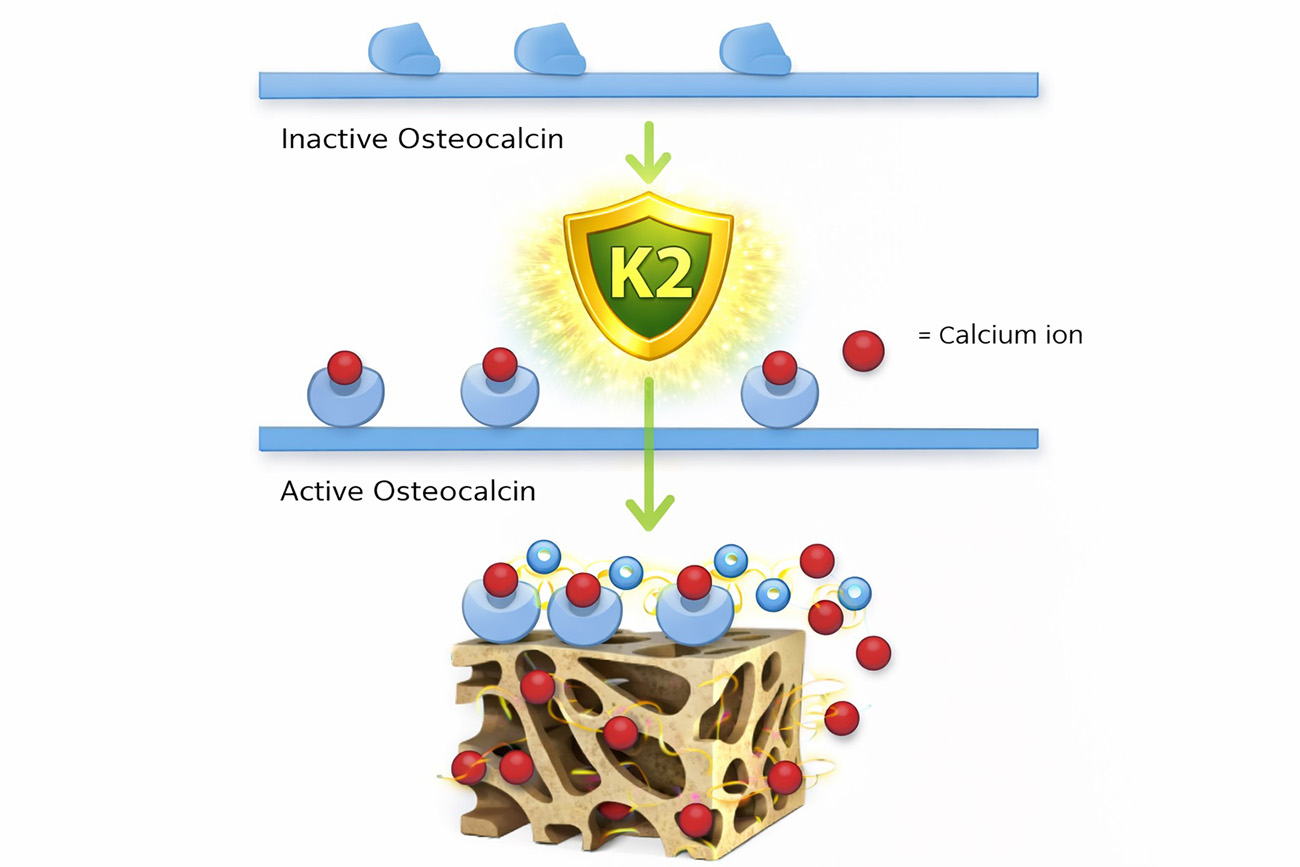
- Bone Density: Vitamin K helps a protein called osteocalcin bind to calcium, which literally “glues” minerals into your bone matrix.
- The Gut Connection: While we eat K1 in veggies, “good” bacteria in our intestines create Vitamin K2, which helps keep calcium in our bones and out of our arteries.
- Stored Energy: Since it is a fat-soluble vitamin, your body stores it in the liver and fatty tissues for when you need it most.
- Balanced Health: High levels of Vitamin K ensure that calcium goes to your skeleton.
Fun Facts
Here are some interesting facts about Vitamin K:
- Babies are born with very little Vitamin K, which is why they get a “protection shot” immediately after birth to prevent dangerous bleeding.
- Taking strong antibiotics for a long time can lower your Vitamin K levels because they accidentally kill the “good” bacteria that make it.
- Leafy greens like spinach, kale, and broccoli are Vitamin K superstars.
- One cup of cooked spinach provides over 700% of the daily recommended value for Vitamin K.
Review
Let’s quickly recap what we learned about Vitamin K:
- In which part of the body do “good” bacteria produce Vitamin K2? Intestines
- What mineral does Vitamin K help “glue” into our bones to make them strong? Calcium
- What does the “K” stand for in the original German research for this vitamin? Koagulation
- Where is Vitamin K stored in the liver and fatty tissues? Liver and Fatty Tissues

Recent Comments