
Guiding Questions
- What is the appendix?
- What are the parts of the appendix?
- What are the functions of the appendix?
Overview
Humans have gradually evolved over their existence – their features and organs have shifted and changed to better fit their new lifestyles over time. For example, very early humans used to walk on all fours, requiring the use of a tail for proper balance. However, as they evolved to walk upright, the tailbone became a vestigial (or useless) structure.
Most people used to think that the appendix was a mostly useless part of the body as well. However, we now know that the appendix plays a key role in gut bacteria balance and immune system support. Although it is usually not vital to life, unlike organs such as the heart, having it can be beneficial.
Functions of the Appendix
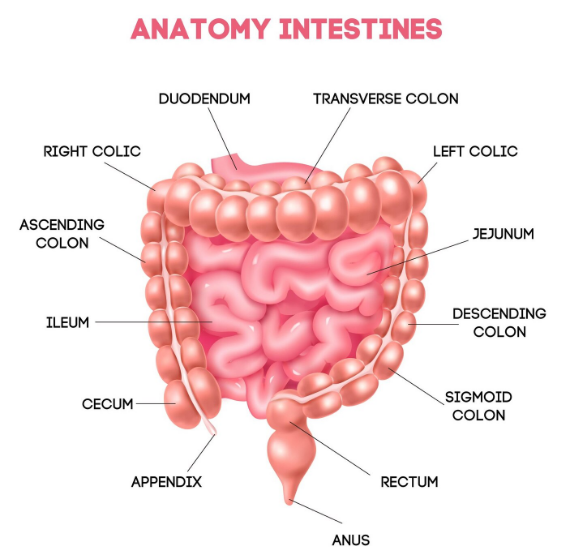
The appendix, properly known as the vermiform appendix, is a pouch of tissue found in the lower right portion of the abdomen, attached to the first part of the large intestine called the cecum. While it is not necessary for life, it certainly has beneficial functions.
First, it stores important white blood cells that are part of the immune system. Particularly, it stores B and T cells, which helps fight pathogens and produce antibodies.
It also stores good bacteria from the gut whenever you are sick. This protects the good bacteria while you are recovering from sickness. Once you are recovered, the bacteria can safely return back to the intestines. By protecting and supporting beneficial bacteria, it helps to preserve the balance between good and bad bacteria. It prevents bad bacteria from growing excessively compared to good bacteria.
Layers of the Appendix
The appendix is composed of multiple layers.
The mucosa is the innermost lining.
The submucosa is the layer directly above the mucosa. It contains lots of immune system cells and lymphoid tissue.
The muscularis propria is the third layer. Its name refers to the fact that this is a layer of muscle which moves the appendix and the contents inside of it.
The serosa is the final layer. This outer layer serves to protect the appendix.
Life Without the Appendix
While the appendix is influential, most people can live without it. In fact, some people need to get it removed at some point in their lives from a condition called appendicitis. Appendicitis, a medical emergency, refers to when the appendix swells and causes irritation; it could potentially burst if not treated. An appendectomy is required to surgically remove the appendix before further damage can be caused. Luckily, an appendectomy is a familiar medical procedure – hundreds of thousands happen in the U.S. per year; most take an hour and occur within 24 hours of being admitted into the hospital. The success rate is over 95%.
Life without an appendix would not be significantly different. Full recovery happens in approximately 6 weeks after surgery. Within the recovery period, the patient will very slowly return to daily physical activities; while they are encouraged to move frequently, they will usually avoid climbing stairs, lifting heavy objects, standing for long periods, etc. under later on in the recovery phase. They will also gradually transition from soft foods to more solid foods. They are also not allowed to submerge the surgical wound in water until it is fully healed. After this brief recovery phase, life returns to normal. The patient can resume daily functions and activities after healing properly.
That being said, it is important to try to preserve the health of the body, including the appendix, to the best of one’s ability. This includes drinking sufficient water, eating healthy, staying active, avoiding unnecessary medications, and even prioritizing mental health and stress (which affects gut health).
Review
- Is the appendix a vestigial organ? No
- What part of the large intestine is the appendix attached to? The Cecum
- What is the innermost lining of the appendix? The Mucosa
- What is the outermost lining of the appendix? The Serosa
- Can one technically live without the appendix? Yes
DISCLAIMER: THIS BLOG POST DOES NOT PROVIDE MEDICAL ADVICE
The blog post and everything contained on it is for informational purposes only. No material on this site is intended to be a substitute for professional medical advice, diagnosis or treatment. Always seek the advice of your physician or other qualified health care provider with any questions you may have regarding a medical condition or treatment and before undertaking a new health care regimen, and never disregard professional medical advice or delay in seeking it because of something you have read on this website.

Recent Comments