
Guiding Questions
- What is the lymphatic system?
- What are the components of the lymphatic system?
- What are the functions of the lymphatic system?
- What are some common diseases related to the lymphatic system?
Overview
When something bad, like a virus or bacterium gets in your body, there are two main systems that help you fight it off – your immune system and your lymphatic system. Some sources like to consider them as separate systems, while other sources say that the lymphatic system is actually a part of your immune system. The lymphatic system is one of the soldiers that fights your body’s battles! It is also called the lymph system.
Not only that, but the lymphatic system also controls the balance of fluids in your body using a system of organs, tissues, and vessels. Tissues in the lymphatic system are known as lymphatic or lymphoid tissue.
Lastly, it helps the body remove harmful and damaged substances, and helps the body absorb helpful molecules like fats.
A Closer Look at Lymphatic System Organs
There are quite a few organs that make up your lymphatic system. Let’s take a closer look.
Bone marrow is found in your hip bones, backbones, and breast bone. It is a spongy tissue that is found in the center of your bones, and its main job is to make blood cells. It contains stem cells, which are like baby cells; they start off the same but grow up to do very different things. Blood cells start off as stem cells in the bone marrow – including red blood cells, white blood cells, and platelets. Once they fully mature, they go to other areas of the body such as the blood.
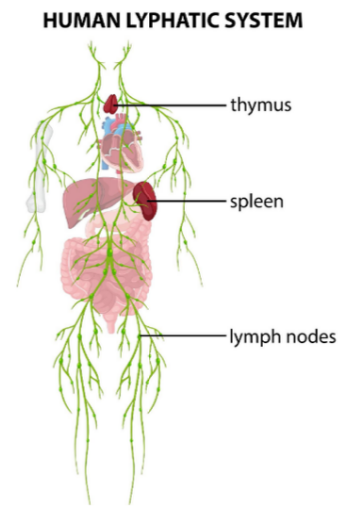
Your thymus is a gland in your upper chest. This is where T-cells are made. T-cells are a type of white blood cell that help fight invaders. The thymus will typically shrink as a child matures, and is very small in adults.
There are about 600 lymph nodes throughout your body, typically in groups in your neck, chest, armpit, abdomen, and groin. They are bean-shaped glands that filter lymph that passes through them and clear out damaged cells. They also store immune system cells like lymphocytes that help fight invaders. They attack any bacteria, viruses, and germs they find in the lymph they filter. When you get sick, your lymph nodes will probably get swollen – because they are helping your body fight invaders.
The spleen is the largest organ in the lymphatic system. It is responsible for filtering blood and removing unnecessary cells in the body. It is located on the left side of your body, in the abdomen and under the ribs. It stores red blood cells and platelets so that the body is prepared for an emergency. It also contains lymphocytes – as blood passes through it, its lymphocytes will attack any harmful substances.
The MALT (which stands for Mucosa-associated lymphoid tissue) is a lymphoid tissue found in many parts of the body such as the airways, small intestine, and other important areas. It finds and destroys harmful invaders.
Other Parts of the Lymphatic System
Your lymphatic system isn’t just made of organs – there are also lots of other very important components. Let’s dive into the most important ones.
Cells and tissues in your body tend to drain excess fluid. Some get reabsorbed into your capillaries (a type of blood vessel). The fluid that isn’t reabsorbed is called lymph, or lymphatic fluid. Lymph can carry lots of different things including germs, cells, macrophages (a type of white blood cell that fights infections), and other substances. It can also contain minerals, proteins, and fats from food you have eaten. Not only that, but it transports special white blood cells that fight infections – these white blood cells are called lymphocytes. Lymph is carried by lymph vessels to lymph nodes, which help add more lymphocytes to it and clean it.
Lymphocytes are a very important type of white blood cells that help fight invaders. There are 3 main types of lymphocytes: B cells, T cells, and natural killer cells.
Lymphatic vessels (or lymph vessels) are tubes in your body that connect to the connecting ducts found in the upper chest. They contain one-way valves that move lymph with the help of the pulsing of arteries adjacent to the vessels. The lymph vessel network is actually very similar to the vein and artery network in your body. They help transport lymph away, which contains waste such as damaged cells, germs, and harmful substances from the body’s tissues.
The two main ducts that your lymphatic vessels connect to are called the connecting ducts, located in your upper chest. They are the location where lymph can join back into the blood. They each have their own names too – the right lymphatic duct and the thoracic duct.
Tonsils are small tissues found against the very back of your throat that contain many lymphocytes. They trap any invaders from the food you eat, preventing them from getting inside your body.
Your nasal cavity is located behind your nose. Behind the nasal cavity are your adenoids. The adenoid is also known as the pharyngeal tonsil. The adenoid traps any invaders from the air you breathe to make sure no germs can get inside your body. Adenoids are most active in childhood and shrink as you grow older.
Lymphatic tissue is any other part of your body that has a large amount of lymphocytes, such as the appendix and Peyer’s patches (parts of the small intestine). Lymphatic tissue functions very similar to lymph nodes – it removes waste, germs, and damaged substances from lymph.
A Deep Dive into Lymphocytes
Lymphocytes, as discussed earlier, are very important white blood cells with 3 main types:
B cells, or B lymphocytes, are produced in the bone marrow and they make antibodies. Antibodies are crucial for the body when fighting infections.
T cells, or T lymphocytes, directly help defend the body. They fight infections and also control your body’s immune response.
Lastly, natural killer cells help attack bad things in your body as well. They attack infected cells (such as cells that have been infected with a virus or disease). They also attack mutated or abnormal cells, which are cells that don’t behave normally like they should, including cancer cells.
Common Diseases
Since there are many parts to your lymphatic system, there are also many ways that a part could not function right. Here are a few common diseases related to the lymphatic system:
Lymphedema: Lymphedema is when lymph vessels or nodes get damaged. When they get damaged, they leave behind scar tissue – kind of like when you get a cut! This blocks lymph in the tubes in your lymphatic system. Lymphedema can also happen when a doctor removes your lymph nodes in surgery.
Lymphoma: Lymphoma is when lymphocytes (lymphatic system cells) grow and multiply uncontrollably. This leads to a cluster of unwanted cells, which can cause cancer.
Lymphangitis: This is when your lymph vessels become swollen or inflamed.
Lymphangioma: Lymphangioma occurs when lymph vessels overgrow. They form bumps filled with fluid that are under your skin. These bumps are called cysts. They are noncancerous, meaning they don’t cause cancer. However, they may take up space in other parts of the body and create other problems.
You can avoid most of these diseases by staying healthy! This includes avoiding chemicals, drinking lots of water, exercising, and eating healthy.
Review
- Where are T-cells made? In The Thymus
- Where are B-cells made? In The Bone Marrow
- What type of cell are lymphocytes? White Blood Cells
- What are the hundreds of bean-shaped glands that filter lymph called? Lymph Nodes
- What do tonsils trap invaders from? Food That is Consumed
- What do adenoids trap invaders from? Air That is Breathed In
DISCLAIMER: THIS BLOG POST DOES NOT PROVIDE MEDICAL ADVICE
The blog post and everything contained on it is for informational purposes only. No material on this site is intended to be a substitute for professional medical advice, diagnosis or treatment. Always seek the advice of your physician or other qualified health care provider with any questions you may have regarding a medical condition or treatment and before undertaking a new health care regimen, and never disregard professional medical advice or delay in seeking it because of something you have read on this website.

Recent Comments