
Guiding Questions
- What is the circulatory system?
- What are the components of the circulatory system?
- What are the functions of the circulatory system?
- What are some common diseases related to the circulatory system?
Overview
When you’re in the car, have you ever noticed a highway? On highways, there are lots of cars that move very fast, all in the same direction. Highways help cars get to where they need to go, fast.
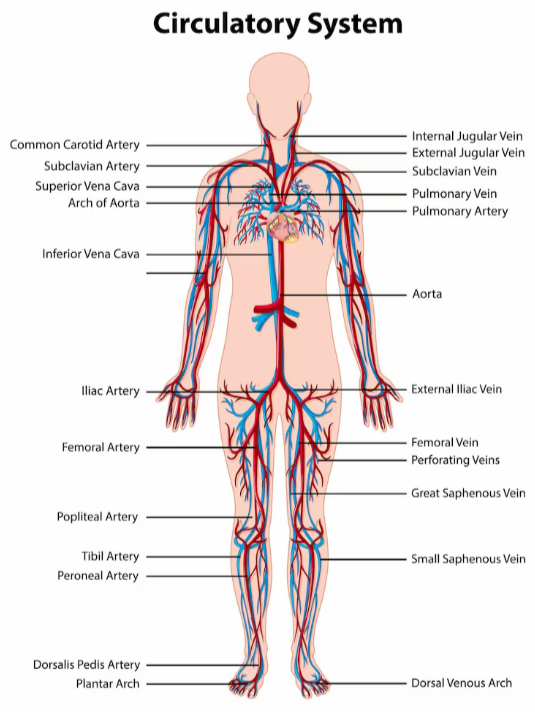
Well did you know, you also have something like a highway in your body? Not with cars and roads, but instead with your blood and your heart! This is called your circulatory system, and it helps get your blood throughout your body.
A Closer Look at Blood
Blood is the red liquid in your body that carries lots of different things. There are many parts of your blood.
Red blood cells are the little red cells. They carry oxygen, which is important for your body to perform daily functions. Red blood cells deliver this vital oxygen to all parts of the body.
White blood cells help fight germs and bacteria. They protect your body and help fight sickness.
Platelets are little fragments, or parts, of cells. They are important whenever you are bleeding. Have you ever noticed that when you get a cut, after a few minutes the blood becomes thicker in the cut and it stops bleeding? The cut eventually forms a scab. This is thanks to the platelets! They help stop bleeding so you don’t lose too much blood by initiating your body’s clotting process.
Plasma is the liquid that carries the red blood cells, white blood cells, and platelets.
Blood Vessels – The Highway to the Heart
There are 2 types of blood vessels – veins and arteries.
Veins carry blood to the heart. The blood that veins carry usually does not have oxygen (with the exception of pulmonary veins). By bringing this blood to the heart, veins allow the heart to pump oxygen back into the blood. The vein called the inferior vena cava is the largest vein in your body.
Arteries carry blood from the heart to other parts of the body. The blood that arteries carry usually does have oxygen (with the exception of pulmonary arteries). Arteries help carry oxygen to parts of the body that need it. You can remember this by saying “arteries” are “away.” The artery called the aorta is the largest artery in your body.
There is one exception to the general rule of veins and arteries in regards to carrying oxygen – pulmonary veins and arteries. Pulmonary means “lungs.” The blood that pulmonary veins carry from the lungs to the heart actually do have oxygen, and the blood that pulmonary arteries carry from the heart to the lungs don’t have oxygen.
How the Heart Works
The heart is a very important organ for your circulatory system. The heart is a muscle that pumps blood throughout your body using electrical signals. It pumps at a regular rate to make sure your body is getting the right amount of blood that it needs. It takes in deoxygenated blood and pumps out oxygenated blood.
Common Diseases
There are a range of problems that may happen in someone’s heart. Some common heart diseases include coronary artery disease, arrhythmias, and heart failure.
CAD (Coronary Artery Disease): CAD can occur when someone consumes a lot of food with fats known as cholesterol, genetics, smoking, or other lifestyle factors. Cholesterol builds up along the artery walls, which makes the space for blood to go through much tighter. This can build up pressure in the arteries or even block them completely. If an artery is blocked, it can lead to a heart attack (if it is an artery that connects to the heart) or a stroke (if it is an artery that connects to the brain).
Arrhythmias: Arrhythmias are when your heart rhythm is not normal. When your heart beats too fast or too slow, it can cause problems in the body.
Heart Failure: Heart failure is when your heart doesn’t pump blood fast enough or effectively enough to keep up with your body’s needs.
It is important to stay healthy and active to help prevent heart diseases from happening. This means eating healthy and performing exercise!
However, some people may get a heart disease even though they are very healthy. This is because they may have genetic mutations. Genes are the parts of DNA that make you who you are. If the genes are mutated, or bad, sometimes people can’t avoid heart disease. This is why it is important to have check-ups with the doctor so they can make sure you are healthy.
Review
- What blood vessel usually carries blood without oxygen? Veins
- What blood vessel usually carries blood with oxygen? Arteries
- What is the liquid that carries all the parts of the blood? Plasma
- What type of cell carries oxygen throughout the body? Red Blood Cells
- What blood component helps prevent bleeding? Platelets
- What organ pumps blood throughout the body? The Heart
DISCLAIMER: THIS BLOG POST DOES NOT PROVIDE MEDICAL ADVICE
The blog post and everything contained on it is for informational purposes only. No material on this site is intended to be a substitute for professional medical advice, diagnosis or treatment. Always seek the advice of your physician or other qualified health care provider with any questions you may have regarding a medical condition or treatment and before undertaking a new health care regimen, and never disregard professional medical advice or delay in seeking it because of something you have read on this website.

Recent Comments