
Guiding Questions
In this blog we’re going to be investigating what the doctor does about your blood pressure during a check-up. A lot of people don’t know what doctors are looking for, and they have questions like:
- What is the difference between systolic and diastolic pressure?
- What is a healthy value for blood pressure?
All About Blood Pressure
Blood pressure is the pressure of the blood against the walls of the blood vessels. It is measured in two numbers, the systolic and diastolic. Let’s explore what systolic and diastolic mean, and how doctors measure them.
- Systolic Pressure: The systolic pressure is the first number in a blood pressure reading. It is the pressure of the blood in the vessels while the heart is in the middle of a pump. It is measured in mmHg.
- Diastolic Pressure: The diastolic pressure is the second number in a blood pressure reading. It is the pressure of the blood in the vessels while the heart is in between pumps. It is also measured in mmHg.
- How to Measure Blood Pressure: There are many tools to measure your blood pressure. In a doctor’s office, you’ll commonly see an arm cuff. The cuff is inflated to stop blood flow, then the cuff is slowly deflated until blood starts to flow again. The time when the blood flows again can be used to find blood pressure.
Healthy Blood Pressure
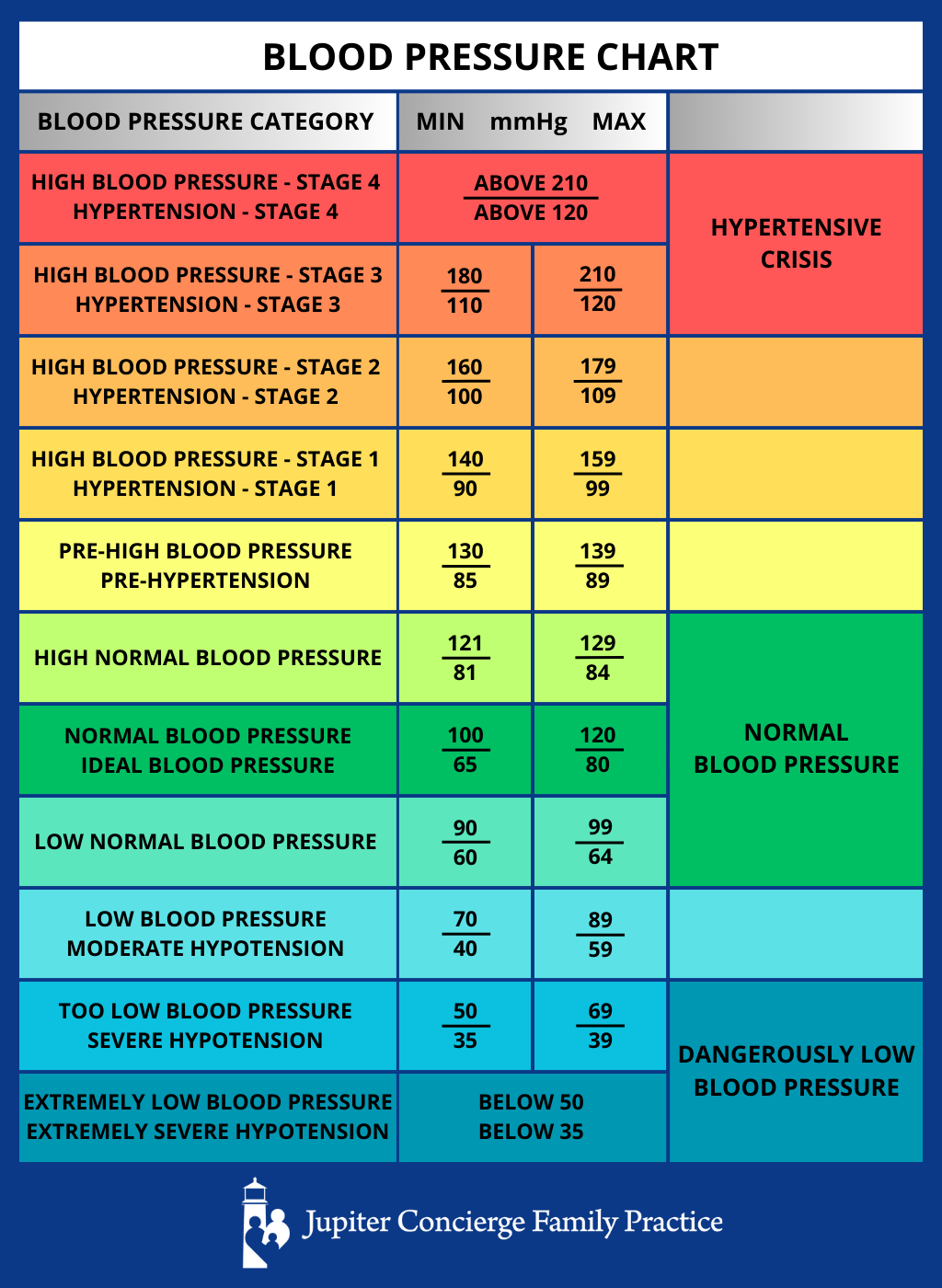
Blood pressure is only healthy within a certain range. If the blood pressure is too high, it is called hypertension, and it comes with a whole host of problems. If the blood pressure is too low, it is called hypotension, and also causes problems.
- Healthy Range: A healthy blood pressure has a systolic pressure between 90-120 mmHg and a diastolic pressure between 60-80 mmHg. This is the optimal blood pressure for the body. Pre-high blood pressure is the systolic range of 120-130 mmHg and diastolic range of 80-90 mmHg
- High Blood Pressure: If the systolic pressure is above 130 mmHg and/or the diastolic pressure is above 90 mmHg, it is called hypertension. Hypertension comes with a whole host of problems like higher risk of heart attack, stroke, kidney damage, and vision loss.
- Low Blood Pressure: Low blood pressure, called hypotension, occurs when the systolic pressure is below 90 mmHg, and the diastolic pressure is below 60 mmHg. It comes with symptoms like dizziness, fainting, confusion, and blurred vision. Eventually it could cause organ damage.
Review
Here are some questions to review your knowledge about blood pressure.
- When does diastolic pressure occur? Between Heart Pumps
- What instrument do doctors use to measure blood pressure? Arm Cuffs
- What is the lower bound for a healthy systolic pressure? 90 mmHg
- Does high blood pressure cause risk for other cardiovascular diseases? Yes
DISCLAIMER: THIS BLOG POST DOES NOT PROVIDE MEDICAL ADVICE
The blog post and everything contained on it is for informational purposes only. No material on this site is intended to be a substitute for professional medical advice, diagnosis or treatment. Always seek the advice of your physician or other qualified health care provider with any questions you may have regarding a medical condition or treatment and before undertaking a new health care regimen, and never disregard professional medical advice or delay in seeking it because of something you have read on this website.

Recent Comments