
Why Plants Turn Carnivorous
Carnivorous plants evolved to hunt because the soils they live in cannot give them enough nutrients to survive.
- Carnivorous plants often grow in acidic, waterlogged soils like bogs and swamps.
- These soils are low in nitrogen, phosphorus, and potassium—nutrients needed for building proteins, DNA, and chlorophyll.
- To survive, plants adapted by developing modified leaves that act as traps.
How They Catch and Digest Prey
Carnivorous plants use amazing traps and digestive juices to turn insects into plant food.
Trap Types:
- Pitfall traps (like pitcher plants) – insects fall into a deep tube with digestive fluid.
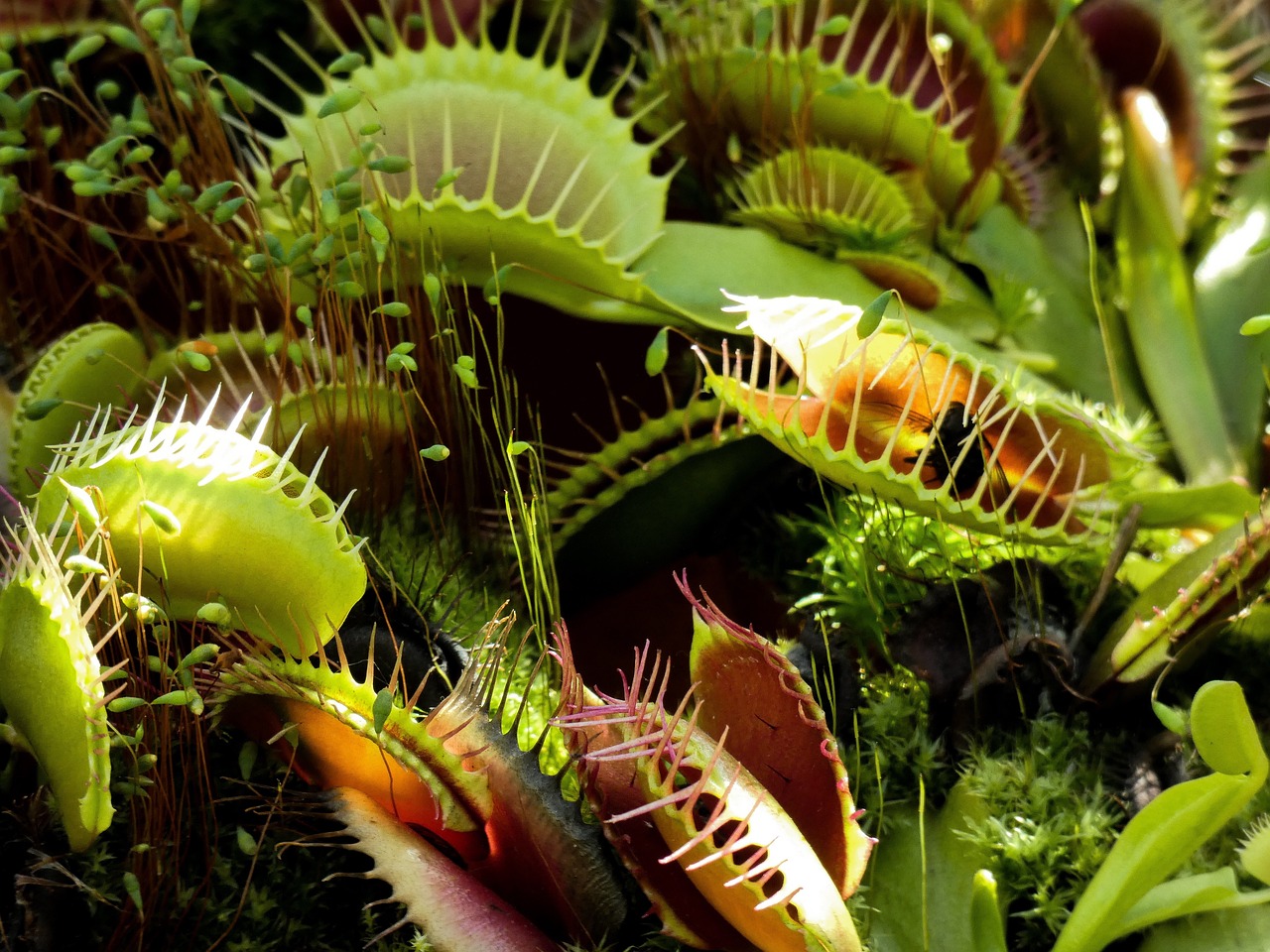
- Snap traps (like Venus flytraps) – leaves snap shut when touched.
- Sticky traps (like sundews) – leaves covered in glue-like drops.
Once they capture prey, they use digestive enzymes (proteases, phosphatases) to break insects down into usable nutrients.
Fun Facts
Here are some interesting facts about carnivorous plants:
- Venus flytraps only close if an insect touches its hairs twice within 20 seconds.
- Some pitcher plants are so big they can trap frogs or small mice.
- The largest pitcher plant can hold up to 2 liters of water and digestive fluid—like a soda bottle!
- Sundews sparkle in the sunlight, tricking insects into thinking they are drops of water.
Review
Let’s quickly recap what we learned about carnivorous plants:
- What type of trap does a Venus flytrap use? Snap Trap
- What do plants release to digest prey? Enzymes
- Where do most carnivorous plants grow? Bogs & Swamps
- What type of trap does Sundew use? Sticky Trap

Recent Comments