
How Do Animals Communicate?
Animals have amazing ways of “talking” using their senses—like sound, sight, smell, and touch!
Sound (Auditory Communication):
- Whales use low-frequency sounds that can travel miles underwater.
- Birds use songs to warn others, find mates, and show their territory.
Chemical Signals (Olfactory Communication):
- Ants leave pheromone trails to lead others to food.
Visual Communication:
- Peacocks spread their colorful feathers to show strength and beauty.
Tactile (Touch) Communication:
- Primates (like monkeys) groom each other to bond and show trust.
Why Do Animals Communicate?
Every message in the animal world has a purpose—to warn, attract, or cooperate! Here are the key reasons why animals communicate:
To Stay Safe (Defense):
- Meerkats take turns watching for danger and give warning calls.
To Find Mates (Reproduction):
- Birds of paradise perform fancy dances and show off bright feathers.
To Find or Share Food (Cooperation):
- Dolphins use coordinated whistles and clicks during group hunting.
To Build Relationships (Social Behavior):
- Elephants rumble through their feet and trunks to stay in touch with their herd, even miles apart.
Fun Facts
Here are some interesting facts about animal communication:
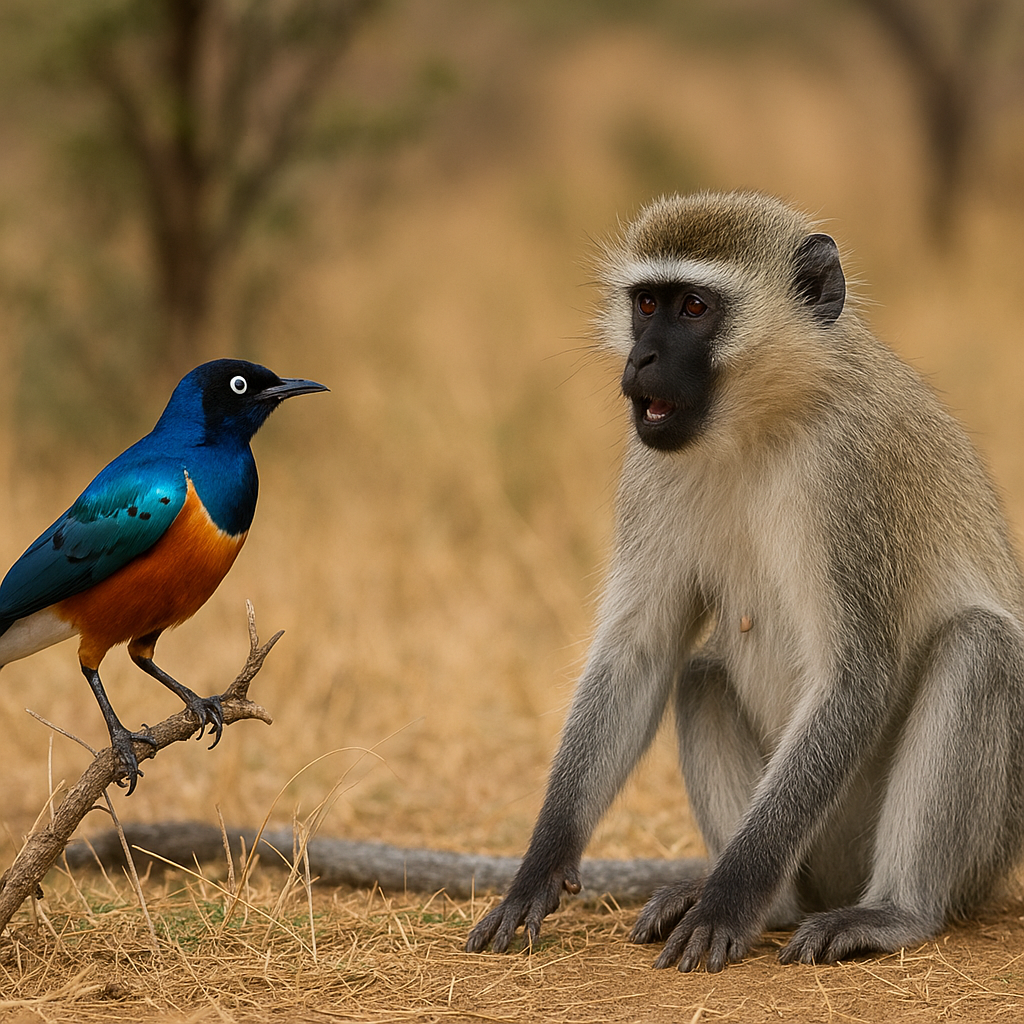
- In some parts of the African savanna, superb starlings (a bird species) and vervet monkeys have been observed responding to each other’s alarm calls.
- Some parrots can learn over 100 words!
- Cuttlefish can change both color and texture to signal mood or danger.
- Dogs and horses can often understand each other’s body language despite being different species.
Review
Let’s quickly recap what we learned about animal communication:
- What do ants leave behind to lead others to food? Pheromones
- What sea animal changes color to signal emotions or danger? Cuttlefish
- What kind of communication do monkeys use when grooming each other? Touch
- What type of communication do whales use that travels long distances underwater? Sound

Recent Comments