
The Inner Structure of a Leaf
Leaves may look simple, but they’re packed with structures that help plants survive and thrive.
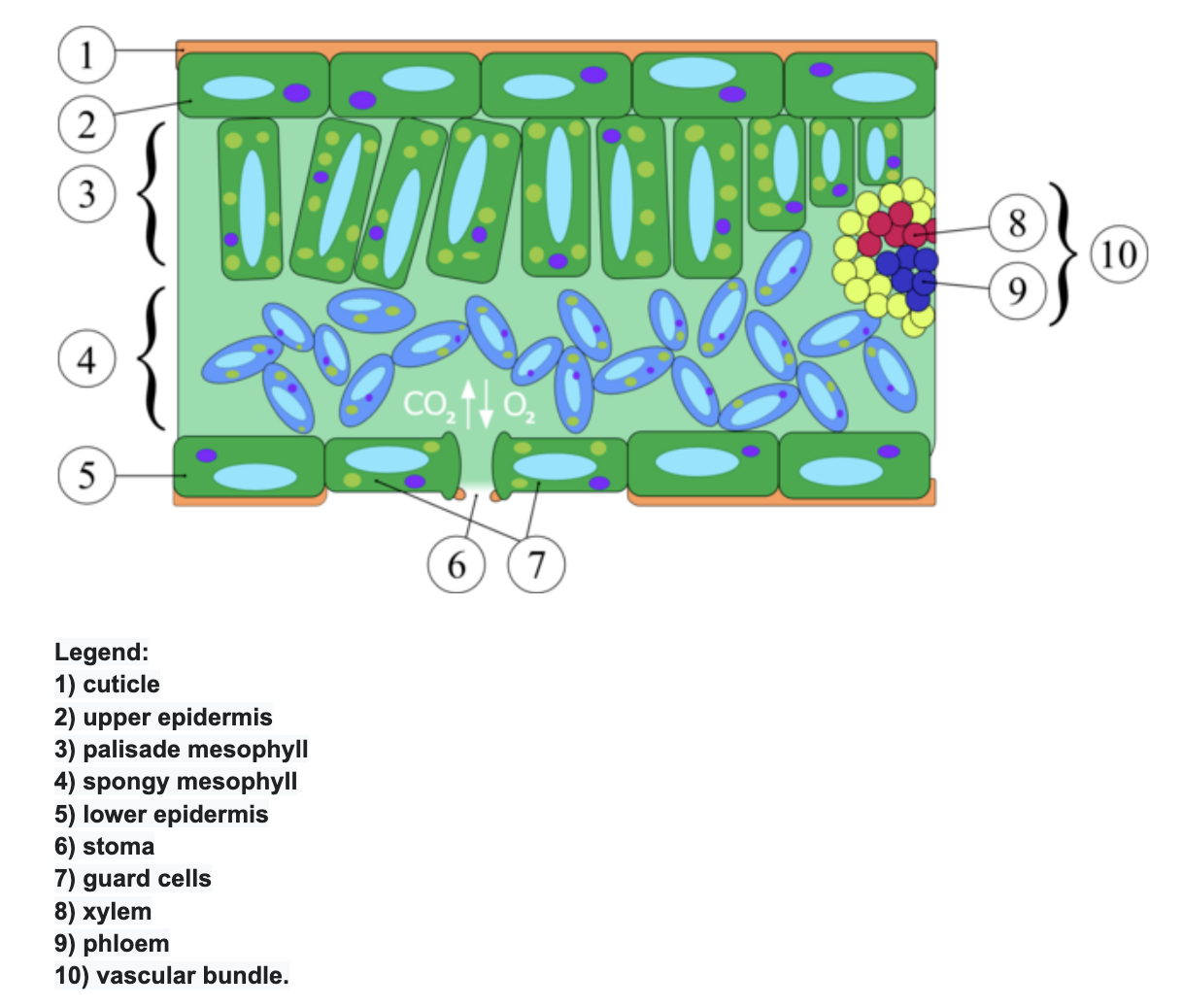
- Cuticle is a waxy outer layer that keeps the leaf from losing water.
- Epidermis protects the leaf and lets light in.
- Mesophyll (middle layer) has two parts:
🔹 Palisade cells: packed with chloroplasts, where photosynthesis happens.
🔹 Spongy cells: help with gas exchange and store water. - Chloroplasts contain chlorophyll, a green pigment that captures sunlight.
- Veins (xylem and phloem) transport water to the leaf and sugar to other plant parts.
- Stomata are tiny pores on the underside of leaves (controlled by guard cells) that let in CO2 and release oxygen and water vapor.
Leaf Types & Adaptation
Leaves have special structures and shapes to survive different environments.
🌵 Desert Plants:
- Have small or waxy leaves (like needles) to reduce water loss
- Feature a thick cuticle and fewer stomata to conserve moisture
🌴 Rainforest Plants:
- Have large leaves to capture sunlight in shady areas
- Use drip tips to help shed excess rainwater quickly
💧 Aquatic Plants:
- Often have air spaces in their leaves to float and absorb sunlight at the water’s surface.
Fun Facts
Here are some interesting facts about leaves:
- The giant water lily has massive leaves over 10 feet wide, strong enough to hold a small child!
- When a leaf is damaged, it can send chemical signals to nearby leaves to prepare for attack (like from insects).
- Bamboo leaves are narrow and waxy, helping them survive in wet and dry climates.
- Plants like the Venus flytrap and pitcher plant use modified leaves to catch bugs for extra nutrients.
Review
Let’s quickly recap what we learned about leaf anatomy:
- Which cells are packed with chloroplasts? Palisade Cells
- What protects the leaf and keeps water in? Cuticle
- What plant tissue carries water to the leaf? Xylem
- Which cells control the opening and closing of stomata? Guard Cells

Recent Comments