
What Are Waves?
Waves are repeating patterns that transfer energy from one place to another, without carrying matter.
- A wave is a disturbance that transfers energy through space or matter.
- Key Properties of Waves:
🔹 Wavelength – the distance between two crests or troughs
🔹 Amplitude – height of the wave (linked to energy)
🔹 Frequency – how many waves pass in one second (measured in hertz, Hz)
🔹 Speed – how fast the wave moves
- Mechanical waves (like sound) need a medium (air, water).
- Electromagnetic waves (like light) can travel through space.
Types of Waves
Waves come in different types and affect our senses—what we see, hear, and feel!
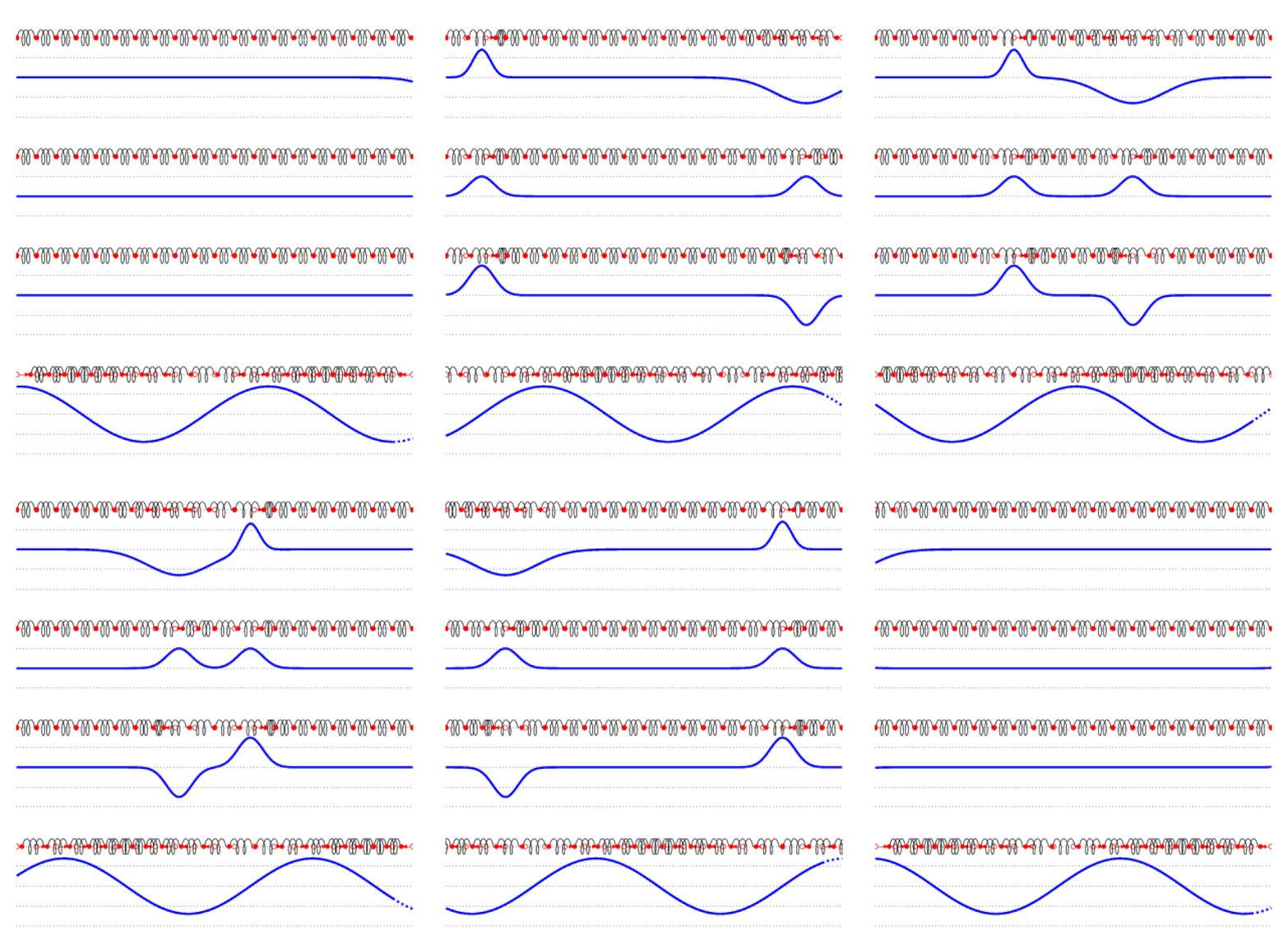
Transverse waves – particles move up and down, while the wave moves forward (like light or water waves).
Longitudinal waves – particles move back and forth, in the same direction as the wave (like sound).
- Pitch depends on frequency — higher frequency = higher pitch.
- Volume depends on amplitude — higher amplitude = louder sound.
We can only see a small part of the electromagnetic spectrum (visible light); others, like UV or X-rays, are invisible.
Fun Facts
Here are some interesting facts about waves:
- Dolphins use ultrasound waves to “see” underwater through echolocation.
- A microwave oven uses microwaves (a type of electromagnetic wave) to heat food.
- Earthquakes release seismic waves that shake the ground.
- The loudest natural sound on Earth was the Krakatoa volcanic eruption in 1883—its shockwaves traveled around the planet!
Review
Let’s quickly recap what we learned about waves:
- What type of wave moves particles up and down? Transverse Wave
- What measures wave energy or loudness? Amplitude
- What kind of wave travels through air as sound? Longitudinal Wave
- What unit is used to measure frequency? Hertz

Recent Comments